
Let's name the real fear first
Your partner thinks a vibrator means you're replacing them. Not consciously, maybe. But underneath the "I don't know how I feel about that" or "Isn't that weird?" or "Don't you like what we already do?" is a specific, legitimate fear: that pleasure tools are proof they're not enough.
I've sat across from couples where this conversation derailed for months because both sides were talking past each other. You're thinking "This helps my body feel more," and your partner is hearing "You don't do it right." That gap is the whole problem.
Why partners get insecure about vibrators (it's not what you think)
It's rarely actually about the vibrator.
Most partners who feel threatened by pleasure tools are processing something deeper: a fear that their ability to pleasure you matters less than they thought. Or that sex with them isn't enough. Or that vulnerability around pleasure is the same as rejection.
In couples therapy, I see this pattern constantly. The partner without the vulva often grew up with a narrow script for what sex looks like. Maybe their previous relationships never used toys. Maybe they learned that "real" intimacy means one person doing everything. Or maybe they're scared that if you get off on your own with a tool, that changes the power dynamic in ways they don't understand.
Women and femme partners have the same insecurity sometimes. The fear shifts slightly ("Will they think I'm needy if I want more stimulation?"), but the core is identical: pleasure tools feel like failure.
Here's what actually fixes this: clear, specific information plus invitation. Not guilt. Not shame. Not forcing it.
Frame it before you introduce the tool itself
Don't lead with "I want to get a vibrator." Start weeks earlier, if you can. Lead with the conversation.
"Hey, I've been thinking about pleasure differently lately. I realized I don't actually ask for what my body needs during sex. That's on me. But I want to change it. Some of that might mean trying new things together."
Watch what they say. Don't defend or educate yet. Just listen.
If they go quiet, ask directly: "Are you worried about something specific?"
Let them name it. "Yeah, I guess I wonder if you wouldn't need it if I was doing something different" or "I don't know, it feels clinical" or "I'm just worried it means you're not happy with me." Whatever it is, that's the real conversation. Not whether vibrators are good or bad. Whether your partner feels secure in being wanted.
That's what you address. Not the vibrator yet.
Use evidence, not theory
Your partner probably thinks vibrators are a replacement for human touch. They're not. Here's what to say:
"Here's the science part. My clitoris has something like 8,000 nerve endings. A vibrator at a specific frequency can activate all of them at once, which my hand can't do. That's not because my hand is bad. It's because it's not a vibration machine. Vibrators are tools for a specific job, like how a back massager works on tension a hand massage doesn't touch. Neither replaces the other. They're different."
Then the emotional part: "What matters to me is being close to you while my body gets what it needs. Not doing this alone, necessarily. But doing it together, so I feel wanted while I'm feeling good."
That reframe changes everything. It's not "I want to use a vibrator instead of you." It's "I want to feel good and feel desired at the same time. Can we figure out how to do that together?"
Introduce the specific tool carefully
Don't surprise your partner with a vibrator in bed. Show it to them when you're both clothed, in conversation mode, not sex mode.
"I've been looking into toys that might work for my body. This one is a lemon clitoral vibrator. It's called the Lem. It's designed to work with the clitoris, not inside. It's quieter than you might think, and the sensation is really different from what a hand or penis can do. Want to hold it?"
Let them feel the weight, the texture, the sound if it's on a low setting. Demystifying it removes threat. If they hold it, it becomes a tool they've touched, not a scary unknown.
Then: "I'm not saying we have to use it tomorrow. I'm saying I want to try it at some point, and I want you to be okay with that. Are you?"
This gives them the chance to say yes, no, or "I need to think about it." Don't push past a no. But a "I need to think about it" is an opening.
The first time: make them part of it
Don't use the vibrator solo first. Use it together, and make your partner the one holding it.
During foreplay, when you're both already turned on and touching, pause and say: "I want you to try something. I'll tell you if it feels good."
Hand them the lemon vibrator. Guide their hand if they're unsure. "Just hold it here, on the lowest setting. Let me feel it for a second."
You're not disappearing. You're right there, responding to them, watching their face. You're making it clear: this tool is part of what we're doing, not a replacement for you.
Most partners feel completely different once they're the one controlling it. Suddenly they're not being replaced. They're expanding what they can do. They're watching you respond to something they're giving you. That's powerful for them.
Talk through the good part right after
While you're still close, still connected, say: "That was really good. I felt different than usual. I loved that you were doing it."
Be specific. "The sensation on my clitoris was intense in a way I can't create. And having you there made it feel intimate, not lonely."
Your partner needs to hear that the pleasure didn't make you feel alone. It made you feel closer, because they were part of it.
Normalize it by using it regularly
Don't make vibrators a special occasion. After you've introduced it together a few times, introduce it during solo sex too. Then mention it casually: "I used the lemon vibrator yesterday and it felt amazing."
Treat it like you'd mention a good bath or a workout. That removes the shame and the secrecy. Partners get more insecure about things that feel hidden.
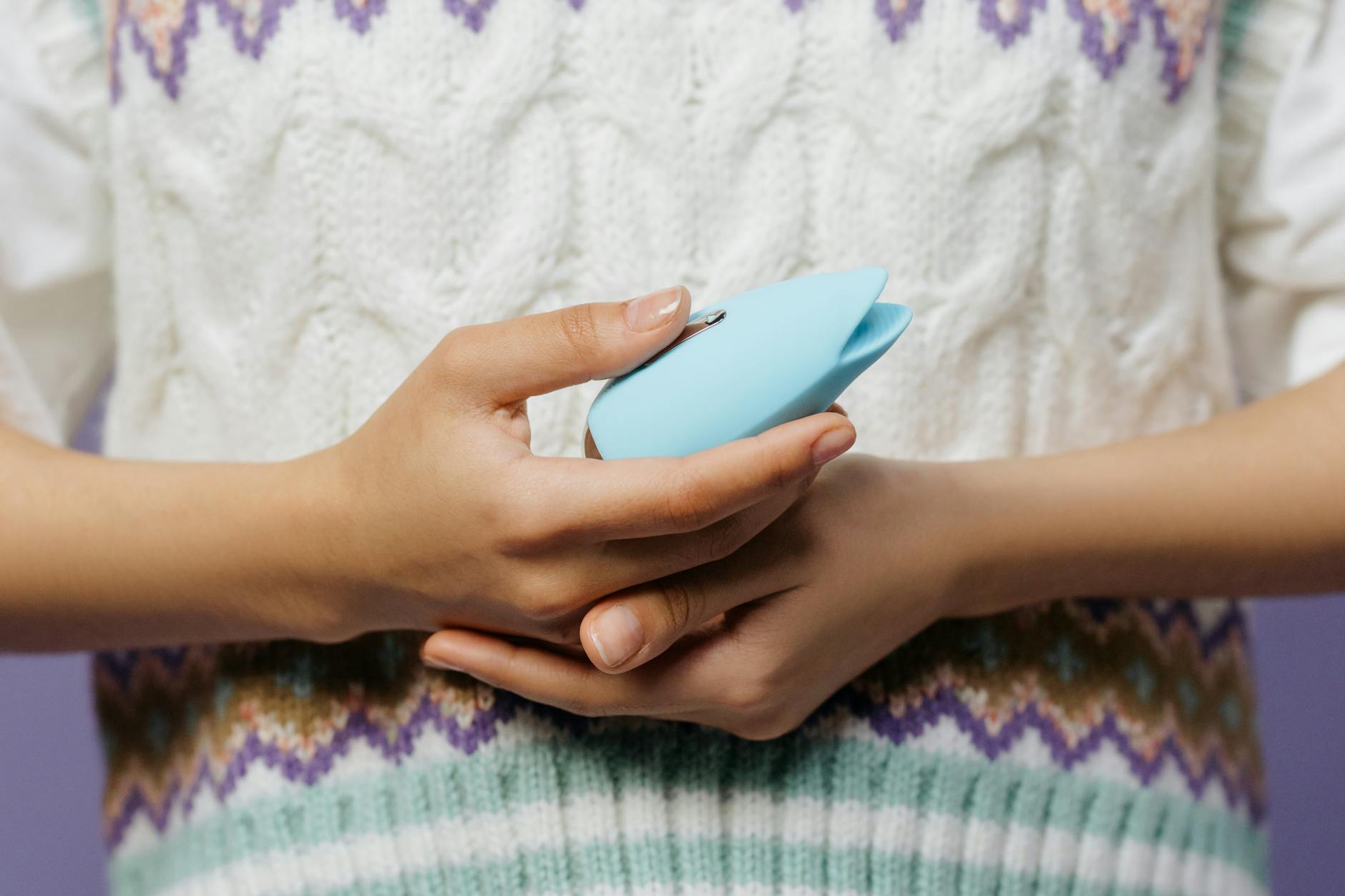
Photo by cottonbro studio on Pexels
When your partner asks why you didn't tell them sooner
Some partners will eventually ask, with a little hurt in their voice, why you didn't introduce this earlier. Why you suffered through sex that wasn't hitting the mark without mentioning it.
Be honest and gentle: "Because I didn't have the words. I thought something was wrong with me. I didn't know how to ask for what my body needed without making you feel bad. I'm learning that I deserve to feel good, and that's not about you. It's about me knowing myself better."
That answer does something important. It gets your partner out of "victim of the vibrator" mode and into "my partner is learning to love themselves, and I get to be part of that."
It reframes the whole thing from threat to growth.
The conversation that prevents all of this
Ideally, you'd have this before you introduce any toy. But if you haven't, here it is:
"I've realized I haven't been great at asking for what I need sexually. That's something I'm working on. Sometimes that might mean trying things we haven't tried before. I need to know that's something you're open to, not because you're obligated, but because my pleasure matters to you."
Then listen to what your partner says. Really listen. Because their answer will tell you whether this is a communication issue, a security issue, or a mismatch in values around pleasure itself.
Sometimes the insecurity lifts completely once you've named it. Sometimes it takes a few conversations. And sometimes your partner genuinely isn't interested in exploring, and that's information you need too.
The goal isn't to force your partner to be okay with vibrators. The goal is to be honest about what your body needs and to invite your partner into that in a way that makes them feel wanted, not replaced.
A lemon clitoral vibrator is just a tool. But the conversation around it? That's where intimacy actually lives.
People also ask
What if my partner refuses to let me use a vibrator?
That's a bigger conversation than the vibrator itself. A refusal to let you explore your own body is a sign of control, not love. You might benefit from couples counseling, where a neutral third party can help your partner understand that your pleasure is separate from their adequacy. You deserve to know your own body.
Can we use a lemon vibrator if my partner has erectile dysfunction?
Absolutely. In fact, lemon clitoral vibrators can take pressure off both partners during erectile concerns. Your partner doesn't have to perform penetration or manual stimulation in a specific way. You get reliable clitoral stimulation. Your partner gets to relax. How to Use a Lemon Vibrator When Your Partner Has Erectile Concerns walks through exactly how to frame this conversation.
Will using a vibrator with my partner make them feel emasculated?
That depends on how you frame it. If you introduce it as "you're not enough," yes. If you introduce it as "I want to feel more, and I want you here while it happens," most partners feel the opposite. They feel like they're giving you something. Make sure they understand that their touch, their presence, and their participation matter. The vibrator is an addition, not a replacement.
How do I bring this up if my partner is very traditional about sex?
Start small. Don't jump straight to vibrators. Ask them about pleasure in general first. "What makes sex feel good to you? What would make it feel even better?" Listen to their answer. Then say, "I've been thinking about that for myself too. I want sex to feel as good for me as it does for you." That's not about vibrators yet. That's about both of you prioritizing pleasure. Once they're invested in your pleasure, the conversation about tools becomes easier.
Is it normal to feel insecure when your partner wants to use a vibrator?
Completely normal. A lot of people are taught that their bodies should be enough for their partners, which sets everyone up for impossible standards. If you're the partner feeling insecure, that's worth exploring. Ask yourself: am I worried they don't want me, or am I worried I'm not doing sex "right"? Those are different issues. The first needs reassurance. The second needs perspective.
Should we use a lemon vibrator during penetration or separately?
Both work. Some couples add clitoral stimulation during penetration so the receiving partner gets more sensation. Others use lemon clitoral vibrators before or after. Start with whatever feels least threatening and most natural. During foreplay is often easiest because it removes pressure about "finishing" in a specific way.
The real thing that changes
Here's what I've learned after years of watching couples navigate this: the vibrator almost never ruins things. The conversation does. Or doesn't, depending on how carefully you have it.
Partnered pleasure isn't about one person being enough for another. It's about two people committed to each other's wellbeing, even when that means trying things that scare them a little. A lemon vibrator is just equipment. The real intimacy is the choice to show up for your partner's body, even when it requires learning something new.
If your partner loves you, they'll get there. Sometimes fast. Sometimes slow. But they'll get there, because your pleasure matters more than their fear.
That's what you're really building toward.